
"Protect Your Spine.” Why This Common Yoga Cue Might Be Creating Fear
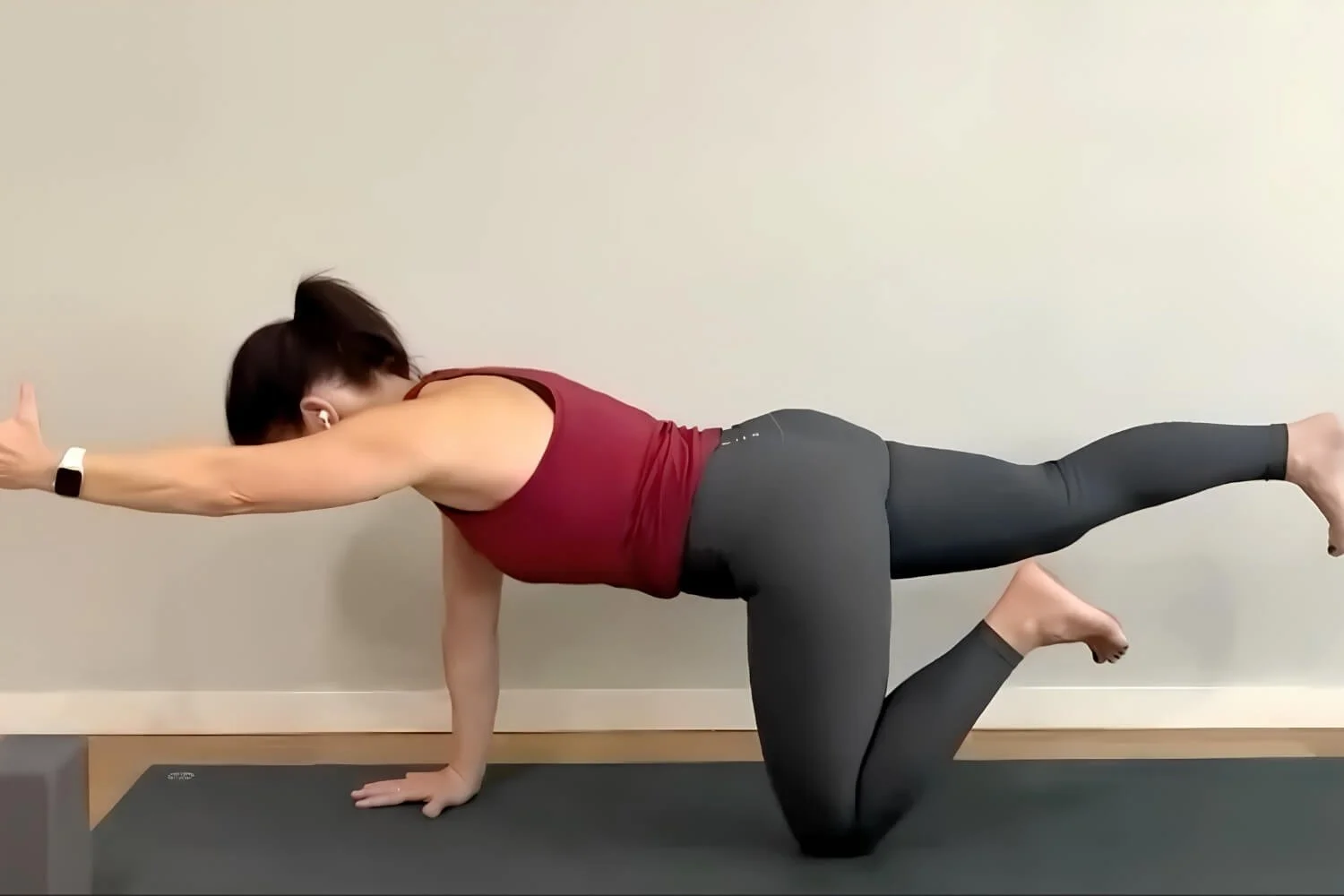
"Engage your core to protect your spine."
It's one of the most common cues in a yoga class, and you've may have said it yourself. It sounds accurate. It sounds safe. It's likely something you learned in your yoga teacher training and never thought to question.
When I hear yoga teaches use this type of language, I ask the same question” “What is a student's nervous system supposed to do with the word protect?”
That word signals threat before a single muscle even engages. In the exact moment a student is trying to build strength and trust in their own body, the cue teaches fear instead.
If you've been following my content for a while, you probably already know my opinion on "engage your core." I've written about that side of the cue directly in Stop Saying “Engage Your Core" and I have a free mini-course that cover why this cue doesn’t work. This post is about the use of language like "protect your spine," and the fear it can create.
Empowering yoga cues focus on stability and capability, not fear and protection. That shift changes how students relate to their own bodies.
In This Article:
Why "protect your spine" style cues can backfire
What the research says about fear and movement
A simple reframe that builds trust instead of anxiety
How to apply empowering yoga cues in your next class
The Fear Factor in Common Yoga Cues
Any cue built around protection carries a hidden message. When a student hears "protect your spine" or "don't hurt yourself," what actually lands is your body is fragile and this could go wrong. Instead of building confidence, the cue can plant a small seed of fear that gets in the way of the practice itself. Plenty of well-meaning cues carry the same problem, including one I unpack in Why "Listen to Your Body" In Yoga Doesn't Work.
Trusting the Body Builds the Practice
My goal as a teacher is always to help students trust and understand their bodies. Fear works directly against that. Constant reminders to guard against injury quietly suggest the body can't be trusted on its own. Empowering yoga cues do the opposite. They invite students to explore their edges with curiosity instead of apprehension.
What the Research Says About Fear and Movement
This isn't just a teaching philosophy. In 2025 Goubran et al published "Relationship Between Fear of Movement and Physical Activity: A Systematic Review and Meta-Analysis." in Physical Therapy (the journal of the American Physical Therapy Association.). They found that fear of movement is linked to reduced physical activity across a range of health conditions.
In other words, when someone starts to associate a movement with danger, they tend to move less, not more carefully. The nervous system doesn't distinguish between "protect your spine" and "your spine is at risk." It just registers threat.
That's the exact opposite of what a yoga cue should do.
Empowering Yoga Cues You Can Use Today
Take the same cue and shift the target from fear to function. Instead of "engage your core to protect your spine," try pull your lower belly in toward your spine to create more stability here. One puts them on edge before they've even moved. The other gives them something to actually do and a simple rationale for why to do it.
The words are doing different work here, even before you get into what's actually happening in the body. A cue that starts with fear puts a student on guard. A cue that starts with a clear, doable action gives them something to aim for.
If you want a repeatable process for building clear, confident cues in general, Effective Yoga Cues: The 3-Part Formula for Clear, Confident Teaching walks through it.
The Bottom Line
Fear-based language like "protect your spine" is usually well-intentioned, but it can quietly teach students to distrust their bodies. Empowering yoga cues that emphasize stability and capability build the same physical action while reinforcing confidence instead of caution.
Get Curious! Q&A
Why do yoga teachers use fear-based cues in the first place?
Most fear-based cues are inherited, passed down from teacher training without much scrutiny. They're usually well-intentioned attempts at safety, not a deliberate choice to instill fear.
Does this mean "protect your spine" is always wrong to say?
No single cue is universally right or wrong. It depends on the student in front of you, and whether they have the strength, mobility, and endurance the posture calls for. The goal is choosing language that builds trust rather than defaulting to fear as the frame.
How can I tell if my cueing language leans fear-based?
Notice words like protect, avoid, or don't hurt yourself. If a cue implies something bad will happen without it, there's usually a more empowering way to say the same thing.
Will empowering language actually change how students move?
Language shapes attention and confidence, both of which influence how a student engages with a posture. The muscular action stays the same. What changes is whether the student approaches it with trust or hesitation.
Go Deeper with a Better Way to Cue Core Engagement
If you want to keep learning how anatomy informs your teaching, start with my free guide Cue with Confidence. It walks you through anatomy-informed cues you can use right away to teach more clearly and confidently.
Download Cue with Confidence →
Goubran, M., Farajzadeh, A., Lahart, I. M., Bilodeau, M., & Boisgontier, M. P. (2025). Relationship between fear of movement and physical activity in patients with cardiac, rheumatologic, neurologic, pulmonary, or pain conditions: A systematic review and meta-analysis. Physical Therapy, 105(6), pzaf050. https://doi.org/10.1093/ptj/pzaf050
About the Author
Dr. Trish Corley is a Doctor of Physical Therapy (Physiotherapy) and yoga teacher trainer with over two decades of clinical experience. She helps yoga teachers learn anatomy, give clear cues, and create classes their students love. Based in Lisbon, Portugal, she leads the Enlightened Anatomy Course, the Elevate Your Impact Mentorship, and the Power to Lead 200-Hour YTT.