
Wrist Pain in Yoga: What's Actually Causing It
A student walks up before class. "I love yoga," she says, "but my wrists are killing me. Should I just skip downward dog?"
It's one of the most common things yoga teachers and practitioners hear. And the instinct to modify or skip postures makes complete sense on the surface. Wrists hurt. Downward dog loads the wrists. So downward dog must be the problem.
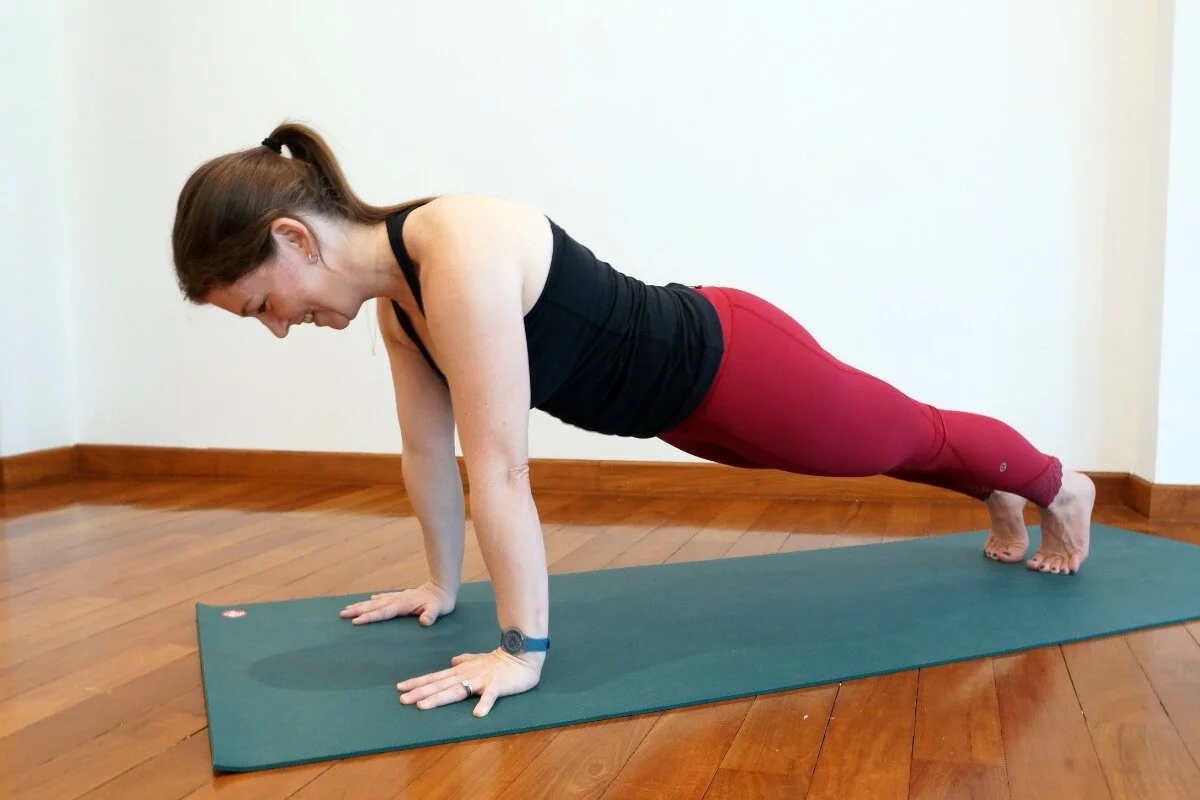
Here's what I've learned after two decades as a physical therapist (physiotherapist) and yoga teacher: wrist pain in yoga is rarely caused by the posture itself. It's most often caused by how the whole body is moving, or not moving, within it.
In This Article:
Why wrist pain in yoga happens
The anatomy of the wrist that actually matters
Why the whole body is the real starting point
How to create a stable foundation in your hands
Should you skip or adapt postures?
Why Wrist Pain in Yoga Is So Common
Most people arrive at yoga having spent very little time bearing weight through their hands. Walking, running, or sitting, we load our feet and hips constantly. Our hands? Mostly keyboards and phones.
Then vinyasa yoga asks those same hands to support a significant portion of body weight, repeatedly, across dozens of postures in a single class. Downward facing dog. Plank. Chaturanga. Again and again.
It's not surprising that wrists speak up. What matters is understanding why they seem to be experiencing pain. The answer here points directly to what helps prevent wrist pain.
The Anatomy That Actually Matters
You don't need a kinesiology degree to confidently address wrist pain in yoga classes. You need two concepts.
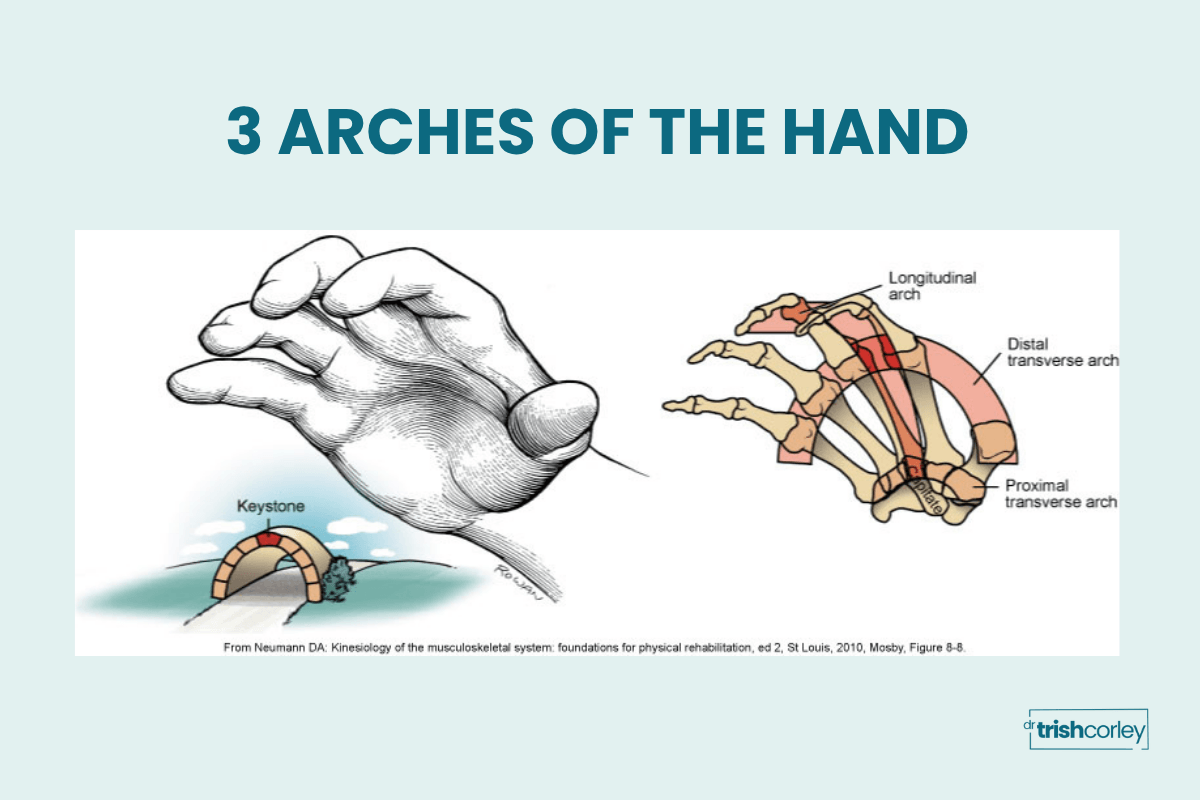
The Arches of the Hand
Look at your palm. Notice the natural concave shape. Your hand has a built in system of arches, similar to the arch of a bridge. The keystone at the top of an arch distributes weight outward rather than straight down. Your hand arches work the same way. When they're supported, load spreads across the whole hand. When they collapse, pressure concentrates at the center of the wrist.
What Your Wrist Position in Downward Dog Actually Means
Take a look at your own hand right now. Bend your wrist so the back of your hand moves toward your forearm. That's wrist extension. That's the position your wrist is in when your hands are on the mat in down dog or plank.
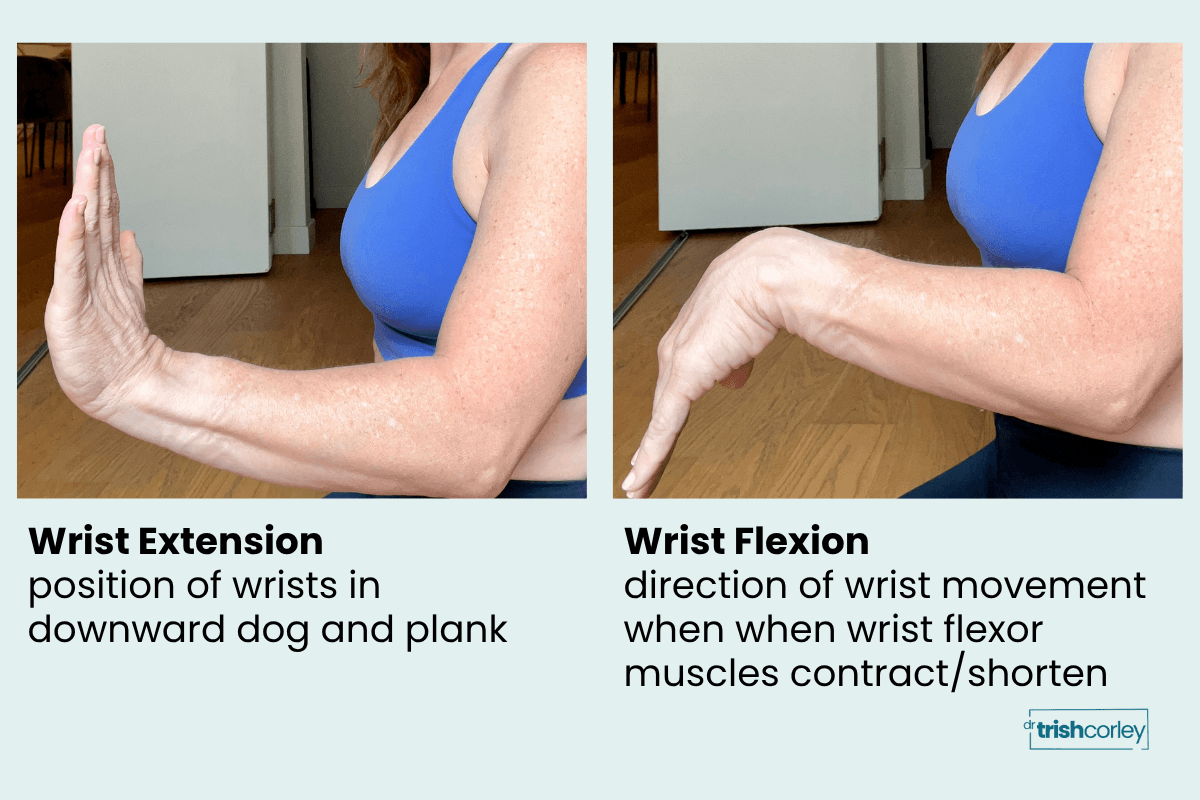
Now feel along the palm side of your forearm, just below your elbow. Those are your wrist flexor muscles. They run down the front of your forearm and their tendons cross the wrist on the palm side. Their job is wrist flexion, which is the opposite of wrist extension.
Here's the key: even though your wrists are in a position of extension in downward dog, the wrist flexor muscles are the ones that need to be most active. When they contract, they support the arches of the hand from underneath, the way scaffolding holds up a bridge. When they're passive, those arches collapse under your body weight, and the load concentrates right at the center of the wrist joint. This shift in the alignment of the hands is often the key to preventing wrist pain in yoga.
This is why "press your palms flat into the mat" tends to make things worse, not better. Pressing the center of the palm down flattens the arch. It takes away the very structure that protects the wrist.
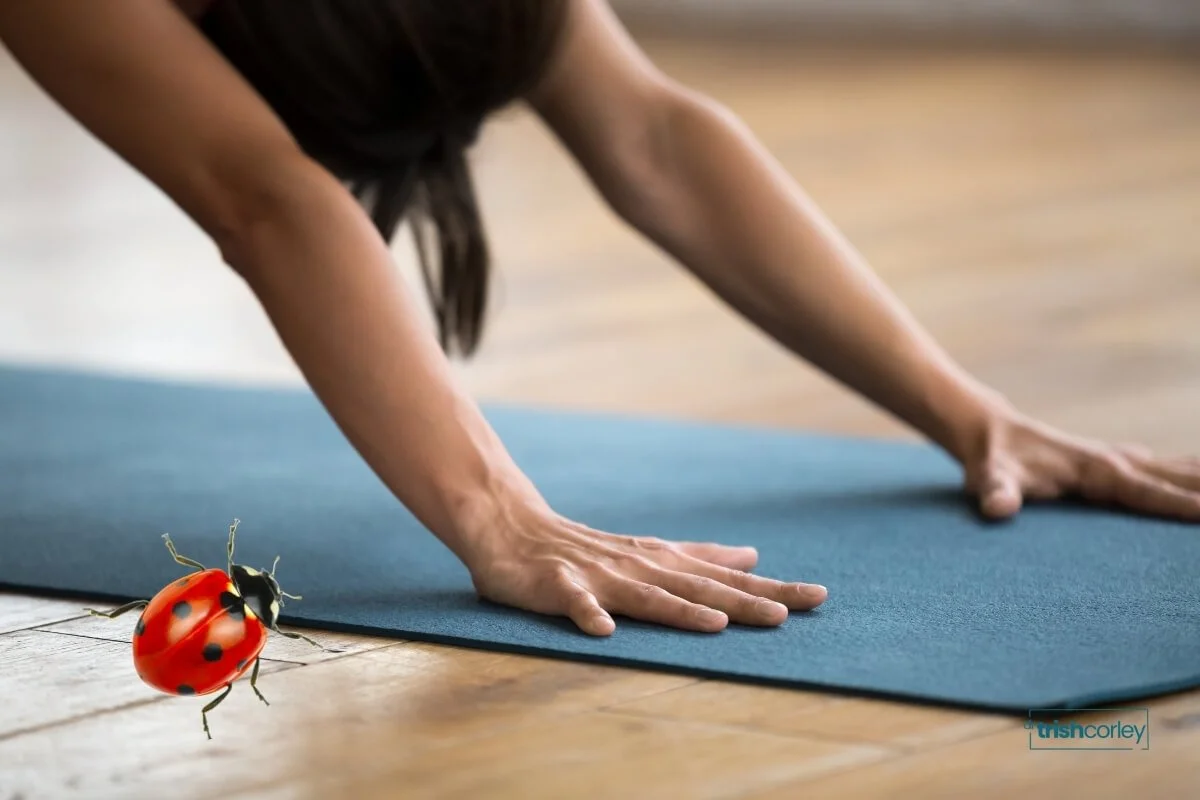
What you want instead is to press the four corners of your hand down plus your fingertips. The graphic below shows exactly where those four corners are.
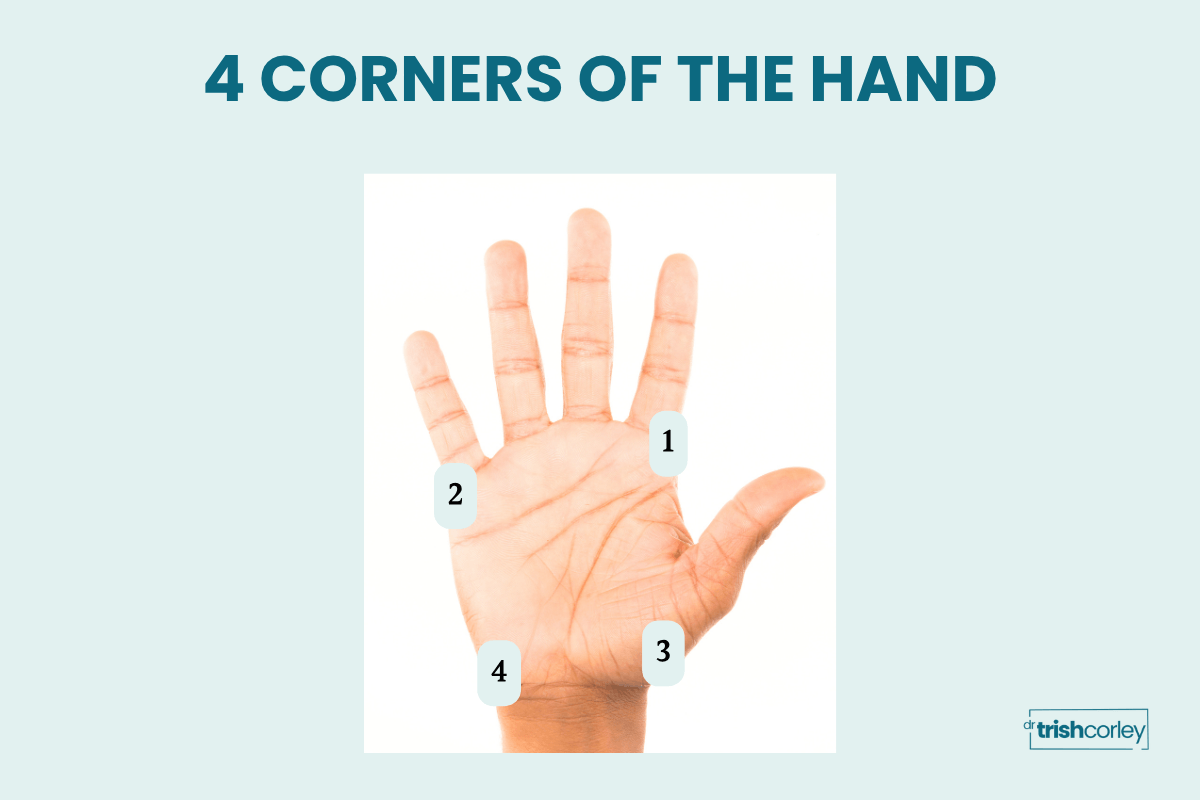
Think of it this way: if you press only the corners and the fingertips, there's a small pocket of air under the center of your palm. That's your arch doing its job. I always tell students to imagine their favorite bug living under their palm. Mine is a ladybug. Press the corners and the fingertips down and leave just enough space so the ladybug survives.
That pressing action is what activates the wrist flexors, lifts the arch, and distributes load across the whole hand rather than concentrating it at the wrist.
It's Not Just About the Wrists
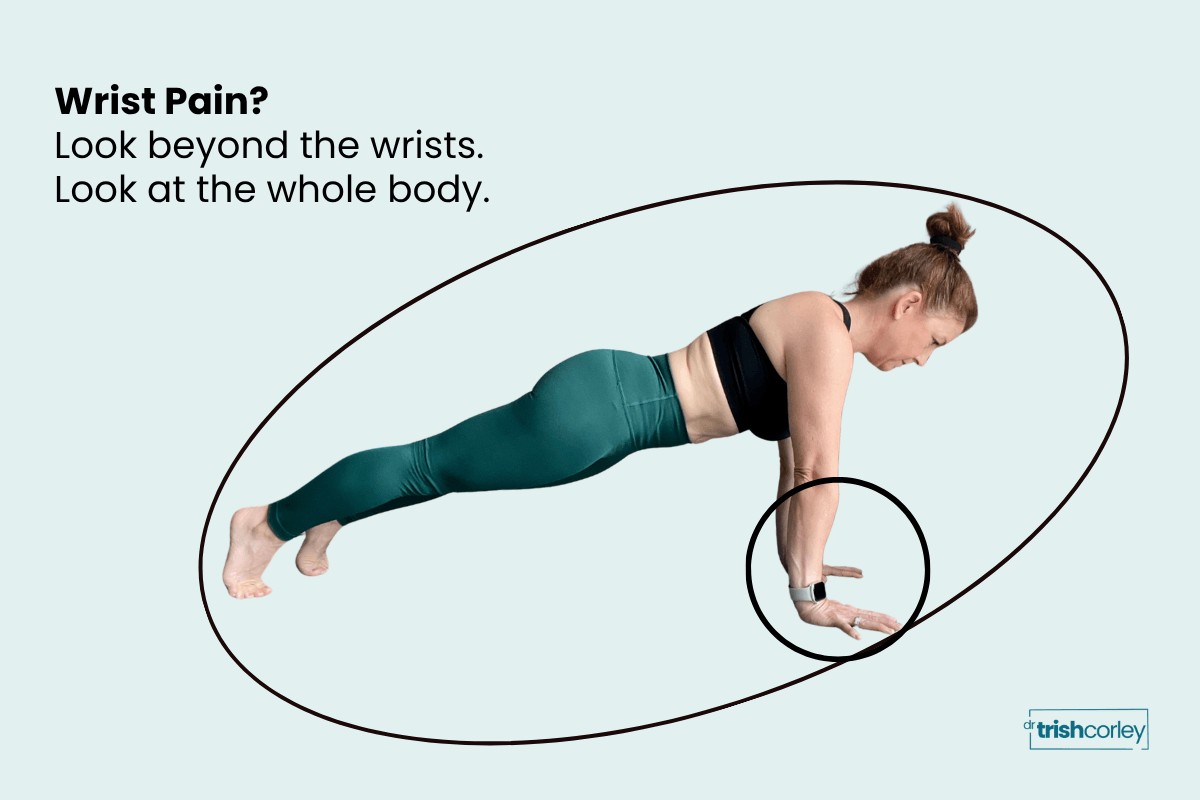
When someone mentions wrist pain, attention goes straight to the wrists. And everything you just read about hand alignment and wrist flexor activation is a great place to start. But what about when balanced alignment of the hands and wrists doesn't prevent wrist pain?
All of the parts of your body need to work together and communicate like a skilled team. In downward facing dog, the hands and wrists are weight bearing — but so are the feet, legs, and core. When those parts are passive, the wrists carry a disproportionate load. And just like when one person has to carry more than their share on a team over and over again, they may start to complain.
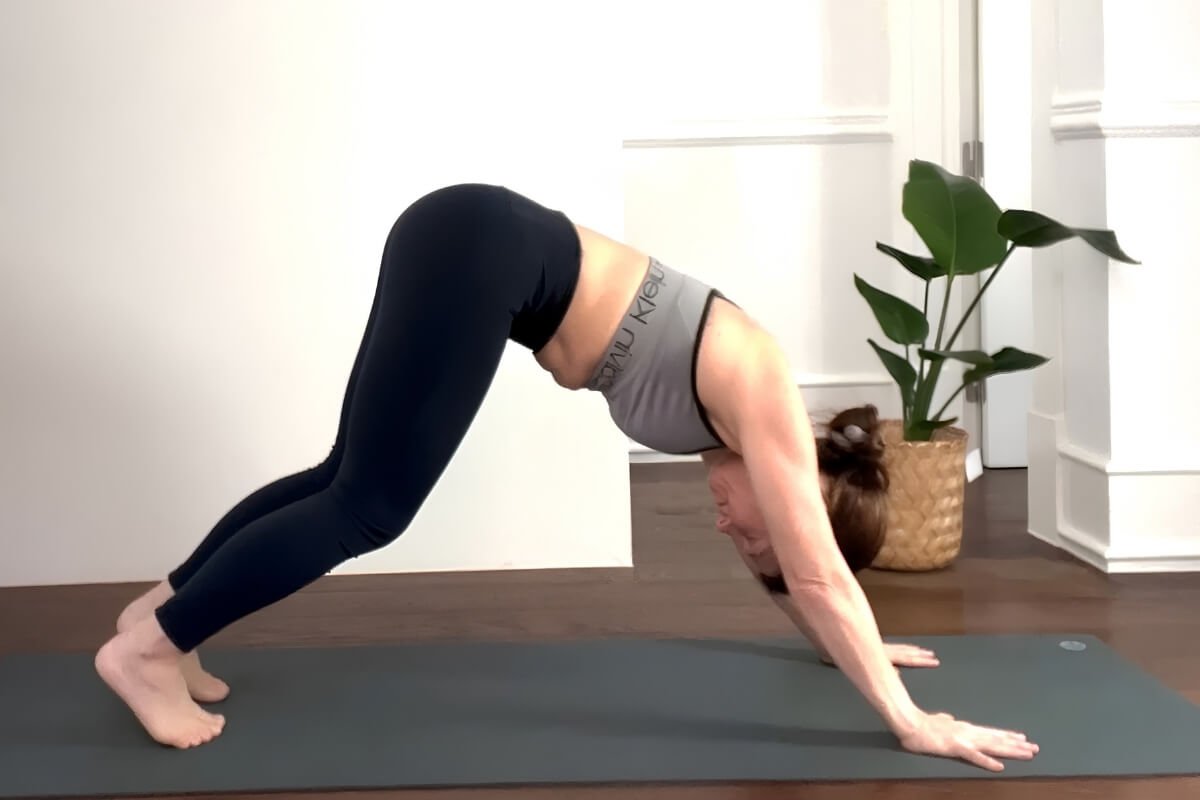
I've seen students completely resolve wrist pain in downward facing dog simply by pressing the four corners of their feet into the mat. Nothing changed at the hands. When the feet engage, the legs activate, and the load redistributes across the whole body. Suddenly the wrists may stop complaining about taking all the load.
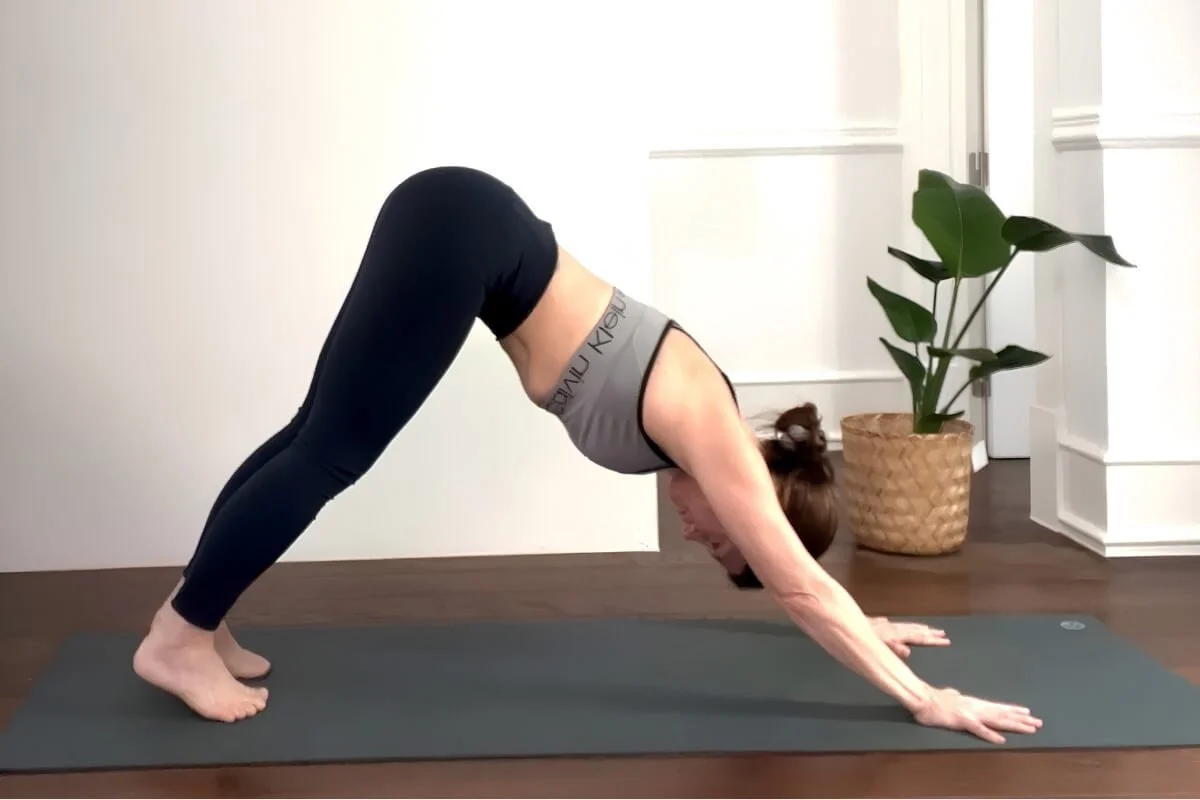
This is why the first place I look when someone mentions wrist pain isn't their wrists. It's the whole body — what's active, what's passive, and where the weight is actually going. Using the whole body is one of the core principles of Balanced Posture Alignment.
Should You Skip or Adapt Postures if There is Wrist Pain?
When a student says their wrists hurt, the most common response is to tell them to skip the posture or offer a modification that takes weight off the hands. Forearm plank instead of full plank. Child's pose instead of downward dog. These options aren't wrong exactly, but there's something worth considering before you go there.
Modifications that remove weight bearing from the hands also remove the stimulus that builds hand and wrist strength. The muscles that support the arches of the hand get stronger when they're challenged with load. Skip the load, and those muscles don't get the opportunity to develop. The student avoids pain in the short term but stays in the same place long term.
A More Empowering Approach
Lead with alignment first. Check the whole body. Cue the four corners of the hands and feet. Look at what's active and what's passive before you change the posture. Often that's all it takes.
When adaptation genuinely makes sense, the most useful options keep some weight bearing through the hands. Hands on blocks reduces the angle of wrist extension and makes it easier to activate the wrist flexors and find the arch. A wall or elevated surface lets a student experience the same alignment principles with less intensity, and they can gradually lower the surface as strength builds.
It's also worth acknowledging that alignment and whole body cueing will resolve most wrist pain in yoga — but not all of it. Sometimes there is a true injury or underlying pathology that needs proper evaluation and care beyond what alignment cues can address. Knowing when to refer a student to a healthcare practitioner is part of being a skilled and responsible teacher. If wrist pain is persistent, worsening, or accompanied by symptoms like numbness or tingling, that's the signal to refer out rather than continue cueing through it.
The Bottom Line
Wrist pain in yoga is common, but it's not inevitable. The most common cause is weight bearing through the hands without the alignment that creates stability. Understanding the arches of the hand and the role of the wrist flexor muscles gives you a clear framework for why the right cues work. And looking at the whole body first is where the most useful information almost always lives.
Get Curious! Q&A
Is it normal to have wrist pain in yoga?
Wrist discomfort when beginning a regular yoga practice is common, particularly in vinyasa or power yoga styles with frequent weight bearing postures. For most people it's a signal that alignment or load distribution needs some attention — and that's very addressable. That said, persistent, sharp, or worsening wrist pain may point to an underlying injury or pathology that goes beyond what alignment adjustments can resolve. If pain doesn't improve with the cues in this post, or if it comes with numbness, tingling, or weakness, it's worth getting a proper evaluation from a physical therapist (physiotherapist) or physician. Wrist pain is common, but it doesn't have to be permanent.
Why do my wrists hurt in downward facing dog but not in other postures?
Downward facing dog places significant load through the hands, especially when the rest of the body isn't actively engaged. When the feet and legs are passive, the wrists absorb more than their share of body weight. The position also places the wrists in extension, which means the wrist flexor muscles need to be most active to support the joint. When they're not, the wrist can feel compressed or strained.
Should I skip chaturanga if I have wrist pain?
Skipping postures is rarely the most empowering long term approach. Chaturanga does require solid hand and wrist alignment, and working on that alignment while modifying the posture as needed is usually more useful than avoiding it altogether. If wrist pain is acute or severe, rest is appropriate, and a physical therapist (physiotherapist) can help identify what's going on before you return to full weight bearing.
Does wrist flexibility matter for yoga?
Range of motion matters less than most people assume. What matters more is the strength to support the range you have. Many people with limited wrist extension practice weight bearing postures comfortably with good alignment. Blocks are a great tool for managing range of motion while strength builds.
Can wrist pain in yoga be a sign of something more serious?
Occasional discomfort from a new load pattern is different from sharp, persistent, or worsening pain. If wrist pain doesn't improve with alignment adjustments, or comes with numbness, tingling, or weakness, it's worth getting a proper evaluation from a physical therapist (physiotherapist) or physician before continuing to load the joint. As a yoga teacher, knowing when to refer out is just as important as knowing which cues to give.
Go Deeper with the anatomy and cueing behind pain-free yoga
If you want to go beyond the concepts in this post and learn exactly which cues to use and when, the Yoga Wrist Clinic walks you through the complete anatomy informed cueing framework for wrist pain in yoga.
Explore the Yoga Wrist Clinic →
Want to experience the cues from your mat? The Wrist Practice is a 30 minute all levels power vinyasa class built around the same alignment principles.
About the Author
Dr. Trish Corley is a Doctor of Physical Therapy (Physiotherapy) and yoga teacher trainer with over two decades of clinical experience. She helps yoga teachers learn anatomy, give clear cues, and create classes their students love. Based in Lisbon, Portugal, she leads the Enlightened Anatomy Course, the Elevate Your Impact Mentorship, and the Power to Lead 200-Hour YTT.